
















This article was written and reviewed by Serge, MSc. Leveraging expertise in Biochemistry, Biogeochemistry and Chemical Quality Control, I share insights based on published research to help readers better understand the potential benefits and limitations of supplement ingredients.
Affiliate disclosure: This site has affiliate links, including Amazon. As an Amazon Associate I earn from qualifying purchases, at no extra cost to you.

Can plant ingredients support male erection health, and which ones have any science behind them?
Search for erection support and you meet pills, creams, devices and a long list of herbs. Most pages promise a lot and cite very little.
I trained in plant science, so I read these claims from the plant outward. I start with the plant itself, then the compounds it makes and why it makes them, and only then the human studies. Marketing comes last.
One point shapes everything below. In plant biochemistry, compounds such as terpenes and flavonoids are called secondary metabolites. Plants make them to deter insects, fight microbes and cope with stress, not to support human erections, so any benefit for people has to be tested and cannot be assumed.
To keep this practical, I use the five plants in one topical cream as a case study: ginkgo, peppermint, arnica, aloe and rosehip. For each, I cover the proposed mechanism, what studies show and what they do not, and the safety points that matter.
How does an erection happen?
I am a plant scientist, not a physician, so for the body side I rely on NIH and clinical sources. An erection is a blood flow event controlled by nerves. The NCBI StatPearls chapter on erection physiology explains that parasympathetic nerves release acetylcholine, which prompts the lining of blood vessels to make nitric oxide.
Nitric oxide triggers the smooth muscle cells in penile tissue to make cGMP, a signaling molecule. cGMP makes those muscle cells relax, so arteries widen and blood fills the spongy chambers of the penis. The same chapter notes that veins are compressed, which keeps the blood in.
An enzyme called PDE5 breaks cGMP down. Prescription drugs like sildenafil block PDE5, and the chapter points out that they do not create cGMP, so sexual stimulation is still needed. That is the gold standard any supplement has to be compared with. My post on a natural nitric oxide formula looks at the nitric oxide side from a supplement angle.
What causes weak erections?
The NIDDK lists many causes, and most are not about skin. Physical causes include diabetes, heart and blood vessel disease, high blood pressure, low testosterone, nerve disorders and prostate problems. Many common medicines can also contribute, including antidepressants, blood pressure medicines and antihistamines.
Anxiety, depression, stress and low self-esteem matter too, as do smoking, heavy alcohol use and low physical activity. The NIDDK adds that ED may signal another health problem, so it is worth a conversation with a health care professional. My post on solutions for sexual confidence covers the emotional side, and my post on a natural companion for stress relief looks at stress.
This is why I keep expectations for any ingredient modest. A plant extract cannot fix blocked arteries or a medicine side effect, and it can hide a problem a doctor should see. My post on natural ingredients for cardiovascular health and my post on blood pressure and natural management cover the blood vessel side, and my post on fenugreek, bulbine natalensis and low testosterone covers the hormone side.
What supplements help strengthen an erection?
Mayo Clinic reviews the main ones. It says some research supports L-arginine, Panax ginseng and propionyl-L-carnitine, while ginkgo and horny goat weed lack enough proof. It also notes that these products are studied far less than prescription ED drugs.
The bigger issue is quality. Mayo warns that some “herbal Viagra” products contain ingredients similar to prescription ED drugs, or the drugs themselves. The FDA tested one such product, HARD AF!, and found sildenafil and tadalafil that were not listed on the label. Hidden drugs like these can lower blood pressure to dangerous levels in people taking nitrate medicines. My printable Supplement Red Flags Cheat Sheet and my printable Supplement Safety Checklist, both products from my guides, help you spot these problems.
So a clear, short ingredient list with no drug-like claims is a better sign than a long list of “proprietary blends”. If you want help comparing labels, the tools page has calculators for that.
Can a cream reach erectile tissue at all?
This is the question I would ask of any cream. The one topical ED product I know of that was studied properly is Vitaros, which combines the drug alprostadil with a skin permeation enhancer. A 2013 news report covers its approval in Europe.
That tells you what it takes. A real drug and a delivery enhancer were needed to get an effect through the skin. A plant cream lists neither, so I treat its job as skin care, and I read the five plants below with that in mind.
Does ginkgo support erections?
Ginkgo biloba is a botanical oddity as well as a supplement. It is the oldest living gymnosperm and the sole surviving species of its group, which is why botanists call it a living fossil. Male and female trees are separate, and the fan-shaped, notched leaves give the species its name, biloba.
The extract comes from the leaves, where the flavone glycosides and terpene lactones are measured. The seeds are a different tissue, and NCCIH notes that fresh ginkgo seeds are toxic when eaten. That is why the plant part on a label matters.
Ginkgo is also the one ingredient here with sexual-function research. A systematic review in the Avicenna Journal of Phytomedicine proposed several routes: inhibiting platelet-activating factor, raising nitric oxide and relaxing smooth muscle. It presents these as explanations from earlier literature, not effects shown in its trials.
The trials themselves are small. The review covered 5 randomized trials with 475 people, and only 41 were men. All used ginkgo by mouth, at 40 to 300 mg a day, and the authors concluded it has limited positive effects on sexual function.
Mayo Clinic says ginkgo may boost blood flow to the penis, but there is not enough proof that it helps ED. NCCIH adds that there is no conclusive evidence that ginkgo helps any health condition, and that it may raise bleeding risk with blood thinners like warfarin.
Ginkgo extract is also hard to judge. A review of standardized leaf extract describes 22 to 27% flavone glycosides and 5 to 7% terpene lactones and reports that 25 of 29 products sampled did not contain the minimum 24% standardized extract. All this evidence is for ginkgo taken by mouth. The sources I opened do not include a trial of a ginkgo cream.
Reading it as a plant scientist, I would call ginkgo the best-studied plant in this list and still not established for erections.

Ginkgo biloba leaf extract, one of the five ingredients listed for this cream.
What does peppermint oil do on male intimate skin?
Peppermint is a plant-science puzzle. Mentha piperita is a sterile hybrid between spearmint (Mentha spicata) and water mint (Mentha aquatica), and a plant biology review notes that this sterility limits conventional breeding.
The plant makes its oil in peltate glandular trichomes, tiny secretory structures found mostly on the underside of the leaf. There, an enzyme chain turns limonene into menthone and then menthol. In my plant biochemistry courses, this is a textbook monoterpene pathway.
Its effect on the skin is a nerve effect. The NCBI chapter on sensory biology explains that menthol shifts the activation threshold of TRPM8, a cold-sensing channel, so nerves fire at warmer temperatures. The skin feels cool and fresh while its actual temperature stays the same. From the plant’s side, menthol is a defense compound. From your skin’s side, it is a cold-sensor trick.
That makes peppermint a sensation ingredient, not a blood flow ingredient. The product page cites a study on peppermint oil and exercise. I opened it: 30 young men took a single 50 microliter dose of peppermint oil on the tongue, with no skin arm, and grip strength, jumps and lung function were measured.
NCCIH says topical peppermint oil appears to be safe in commonly used amounts, with rashes and irritation as possible side effects. Genital skin is thin, so a small amount is a sensible start.
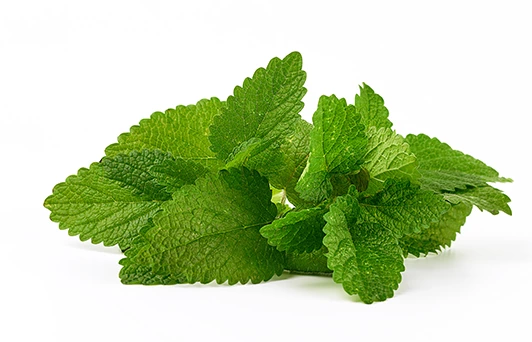
Peppermint oil (Mentha piperita), the source of the cooling feel in the cream.
Does arnica improve blood flow?
Arnica montana is a mountain plant in the daisy family, Asteraceae. In my botany training, I learned that this family is rich in sesquiterpene lactones, defensive compounds that plants make to deter feeding insects. The same compounds explain arnica’s activity in the lab and its allergy risk.
The product page says arnica improves blood flow, and it cites a 2002 paper in Planta Medica. I checked its abstract. The work used cell assays and a mouse ear test, and the anti-inflammatory activity tracked with the sesquiterpene lactone content of the extracts. That is lab work on inflammation signals, not blood flow in men.
The abstract adds that potency depended on the chemical groups attached to the molecule. As a plant scientist, I find that detail telling: the exact chemistry of the extract decides the effect, not the plant name, and a label rarely shows that chemistry.
The same compounds are why arnica needs care. A dermatology reference calls it a strong sensitizer, and Poison Control says it should not be used on broken skin. People allergic to chamomile, marigold or sunflower may react too.
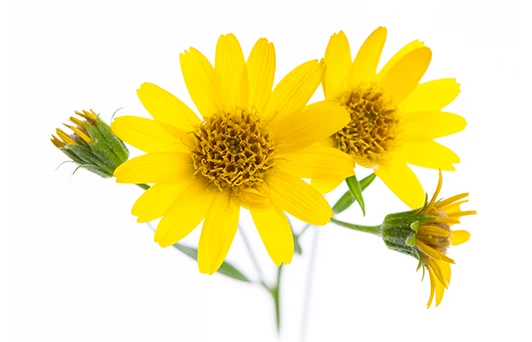
Arnica flower extract (Arnica montana), the ingredient that calls for the most care.
What does aloe add to a cream?
Aloe is a succulent, and its leaf is built from distinct tissues. A review of aloe chemistry describes an outer green rind, an outer pulp near the vascular bundles where the bitter latex sits, and an inner pulp of parenchyma cells that holds the gel.
The latex carries anthraquinones and related phenolics, while the gel is rich in the polysaccharide acemannan. “Aloe leaf juice” on a label does not tell me which tissue it came from, and the product page does not say.
NCCIH says clinical research suggests aloe gel may speed burn healing and reduce burn pain, and that topical use is generally well tolerated. It also lists occasional burning, itching, rash and eczema. The product page cites two general aloe reviews, which do not test this cream or erections.
In an erection-support context, aloe is a comfort ingredient. It supports the skin, and nothing in the sources I opened links it to blood flow in erectile tissue. My post on organic beauty and DIY cosmetics looks at plants like aloe in skin care.

Aloe leaf juice, the soothing and hydrating ingredient in the formula.
What does rosehip seed oil add?
Rosehip seed oil comes from Rosa canina, the dog rose. As a botanist, I like that the hip is not a true fruit. It is the swollen flower base, called the hypanthium, and the seeds inside it are where the oil comes from, not the red flesh.
A 2025 paper in the journal Cosmetics describes it as rich in linoleic and alpha-linolenic acid, plant fats that help soften the outer layer of skin. I covered the plant in the rosehip guide, and my post on natural oils for nourishing skin and nails looks at plant oils more widely.
The same paper tested the oil on facial skin in 27 volunteers, with three drops daily for five weeks. Wrinkle and texture scores improved a little. It was a small pilot with no control group, and it did not test erections or genital skin.
The product page says rosehip is rich in vitamin C and flavonoids that strengthen blood vessel walls. Its cited review covers rose hips, the fruit, and not seed oil on skin. I describe the oil by its fatty acids and carotenoids, which is what the paper measured.

Rosehip seed oil, one of the five ingredients listed for this cream.
Where does this cream fit in all this?
Putting the five plants together, as a plant scientist I see this cream as a gentle plant-based skin-comfort product with a cooling feel. The label names the plants, but a plant name alone does not tell me the chemistry. Plant part, extraction method and amount decide that, and the page gives none of them. It lists moisturizing and soothing plants, and no hormones or drugs, which counts in its favor.
The product page describes bigger goals, including size, erection strength and libido. The research I opened does not show a cream delivering those, so I treat them as the maker’s claims. The page also gives no amounts, so I cannot say how much of each plant is in the tube.
If you use latex condoms, remember the CDC says oil-based products can weaken latex, and this cream lists two plant oils. Patch test on the inner forearm first, avoid broken skin, and skip arnica products if you react to daisy-family plants.
In case you are looking for a plant-based cream with these five ingredients, here is the official product page.
Learn More About Expansil Cream

Common Questions
What foods are considered natural Viagra?
No food has been shown to work like a prescription ED drug. The NIDDK lists eating well as one lifestyle step, along with being active, keeping a healthy weight, quitting smoking and limiting alcohol. My guide to starting a healthier lifestyle is a gentle place to begin.
What do urologists recommend for ED?
The NIDDK describes treating the underlying cause, lifestyle changes and counseling for mental or emotional factors. Medicines include PDE5 inhibitors, testosterone if levels are low, and injectables or suppositories. Vacuum devices and surgery come later if other options fail.
How can I get a strong erection naturally?
The research-backed natural steps are lifestyle ones: regular activity, a healthy weight, no smoking, less alcohol and managing stress. If problems persist, see a health care professional, because ED can point to another health condition.
What supplements can help strengthen an erection?
Mayo Clinic says L-arginine, Panax ginseng and propionyl-L-carnitine have some supportive research, and that ginkgo lacks enough proof. Check with a doctor first if you take medicines, because some supplements interact. Do not combine L-arginine with sildenafil. My post on a men’s health supplement goes through another formula.
Is this cream safe?
The ingredients are generally well tolerated on skin in the sources I opened, but peppermint oil and arnica can irritate or cause allergy. A patch test is a sensible first step. The maker’s “totally safe” wording is marketing language, so I do not repeat it.
Final Thoughts
As a plant scientist, I find the plant stories more interesting than the sales claims: a living fossil tree, a sterile hybrid mint, a succulent with separate gel and latex tissues, and a daisy-family flower that makes defensive lactones. An erection depends on nerves, nitric oxide, cGMP and blood flow, and most weak erections trace to health, medicine or lifestyle causes. Of the five plants in this cream, only ginkgo has sexual-function research, and that research is small and oral.
Peppermint changes sensation, aloe and rosehip support skin comfort, and arnica needs a patch test. I see the cream as a plant-based skin-comfort product, not a replacement for medical care.
This article is for education and is not medical advice, so please talk to a doctor about erection problems.
