















This article was written and reviewed by Serge, MSc. Leveraging expertise in Biochemistry, Biogeochemistry and Chemical Quality Control, I share insights based on published research to help readers better understand the potential benefits and limitations of supplement ingredients.
Affiliate disclosure: This site has affiliate links, including Amazon. As an Amazon Associate I earn from qualifying purchases, at no extra cost to you.
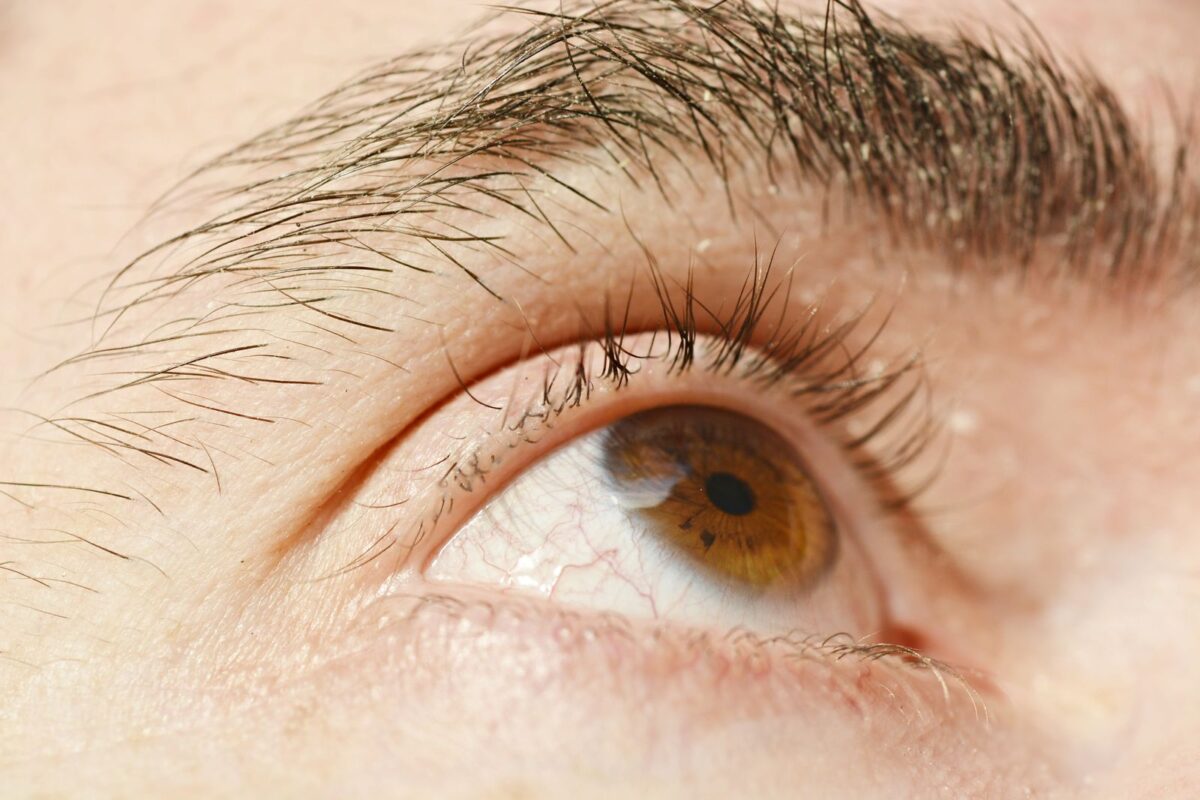
Do lutein and zeaxanthin work for your eyes?
Lutein and zeaxanthin are two plant pigments I know well from my plant biochemistry background. Leaves make them in their chloroplasts to handle excess light, and the human macula, the central part of the retina, collects the same two molecules.
That is a neat story, but eye supplements need more than a neat story. So I go through what these pigments do, what studies show, how much to take, and what to check on a label.
What are the benefits of lutein and zeaxanthin for the eyes?
Both pigments collect in the macula, where they filter blue light and act as antioxidants. The best evidence is about long-term macular health, not about fixing tired eyes overnight.
The NCCIH clinical digest on eye conditions (August 2024) explains the key trial. The AREDS2 study found that adding lutein and zeaxanthin to the original formula had no overall effect on late age-related macular degeneration, but that replacing beta-carotene with a 5 to 1 lutein and zeaxanthin mixture may further reduce late AMD risk.
Do lutein and zeaxanthin work, and can lutein repair eyes?
They work best as a long-term nutrient for people at risk of macular degeneration, not as a repair tool. The same digest says the AREDS formulas may slow progression in people with intermediate AMD, or late AMD in one eye. I am not aware of a trial showing that lutein repairs damaged eye tissue or improves vision in healthy people.
On cataracts, lutein and zeaxanthin had no overall effect on the need for surgery. In the group with the lowest dietary intake, there was a 32 percent reduction in progression to surgery, and the digest says more study is needed.
Can lutein and zeaxanthin improve vision?
Supplements raise the amount of pigment in the macula, which is a measurement. A higher pigment reading is not the same as seeing better, and I would not promise sharper vision to anyone. If a label says it will restore eyesight, I would walk away from it.
Dry, tired or strained eyes after screen time have other causes, and omega-3 is the only supplement the digest mentions for dry eye, with limited evidence and a call for more research. If you take fish oil, try my omega-3 EPA and DHA calculator to see how much of each is in a serving, and for everyday screen habits see my post on keeping your eyes healthy and comfortable.
Which foods have lutein and zeaxanthin?
The classic sources are leafy greens like kale and spinach, and egg yolks. I like the plant side of this, because leaves make these pigments for the same job of light protection, so a salad is a source of the same molecules. For more ideas with leafy greens, see my post on greens drinks and what experts say about them.
Yolk lutein is often absorbed well because it comes with fat. Both pigments are fat-soluble, so I would eat greens with some olive oil or another fat. A supplement is for filling a gap in the diet, not replacing it. My post on daily habits that boost nutrient absorption and energy explains more about eating nutrients with fat.

Commercial lutein and zeaxanthin are extracted from marigold flowers (Tagetes erecta).
What is marigold extract on a supplement label?
Labels often list marigold extract and lutein as if they were two ingredients, but they are one. Marigold (Tagetes erecta) is where most commercial lutein and zeaxanthin come from, so the name tells you the source. As a plant person, I find marigold petals a very efficient pigment factory, and the extract is a concentrated version of it.
The part that matters is the milligram amount of lutein and zeaxanthin, not the length of the list. If a label gives an extract by ratio, try my extract strength calculator to work out how much active compound a standardized extract provides.
How much lutein and zeaxanthin per day?
The AREDS2 formula used 10 mg of lutein and 2 mg of zeaxanthin a day, which is the benchmark I compare labels against. Many products sit near that range, and some use much more. The question of 40 mg comes up often, and I know of no study that justifies it for eye health.
For safety context, EFSA set an acceptable daily intake of 1 mg per kg of body weight for lutein as a food colour. That is 70 mg for a 70 kg adult, but it was set for the additive and is not an upper limit for supplements.
Can you take lutein and zeaxanthin every day?
Daily use is how the trials were run, and doses near 10 mg are common in supplements. The AREDS formulas also contain large amounts of other vitamins and minerals, which the NCCIH notes may affect digestion and drug metabolism. If you take medicine, ask your pharmacist before adding a high-dose eye formula.
Best time to take it is with a meal that contains fat, because the pigments are fat-soluble.
What are the side effects of lutein and zeaxanthin?
At usual doses I know of no common side effects. Very high carotenoid intake can turn the skin slightly yellow, which is harmless and fades after stopping. I know of no established link to liver damage from lutein or zeaxanthin at normal doses, but I would not combine them with other high-dose products without a pharmacist’s check.
The one caution I would stress is beta-carotene, which some older eye formulas contained. It raised lung cancer risk in smokers, which is why the AREDS2 formula swapped it for lutein and zeaxanthin.
Do black pepper, bilberry, ginkgo and maqui add anything?
Black pepper (Piper nigrum) contains piperine, which formulas add to raise absorption of fat-soluble ingredients. The idea is sensible, but I am not aware of a trial showing it raises lutein levels in the eye, and the dose is rarely on the label.
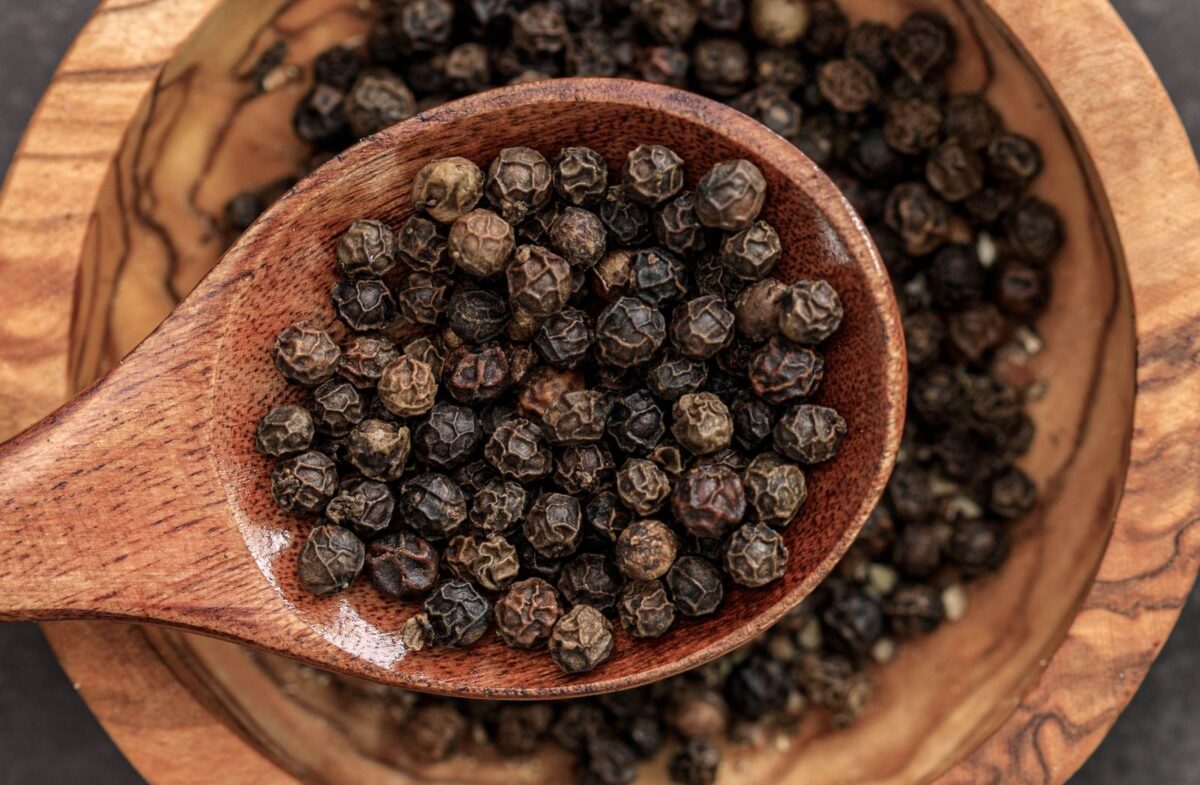
Piperine from black pepper (Piper nigrum) is added to some formulas to help absorption.
Bilberry (Vaccinium myrtillus) is rich in anthocyanins, the dark pigments of the berry, and has a reputation for night vision. The evidence is mixed, so I treat it as a plausible antioxidant. Maqui (Aristotelia chilensis) is another anthocyanin berry with small early studies on dry eye. Ginkgo (Ginkgo biloba) is not supported for AMD, according to the NCCIH digest.
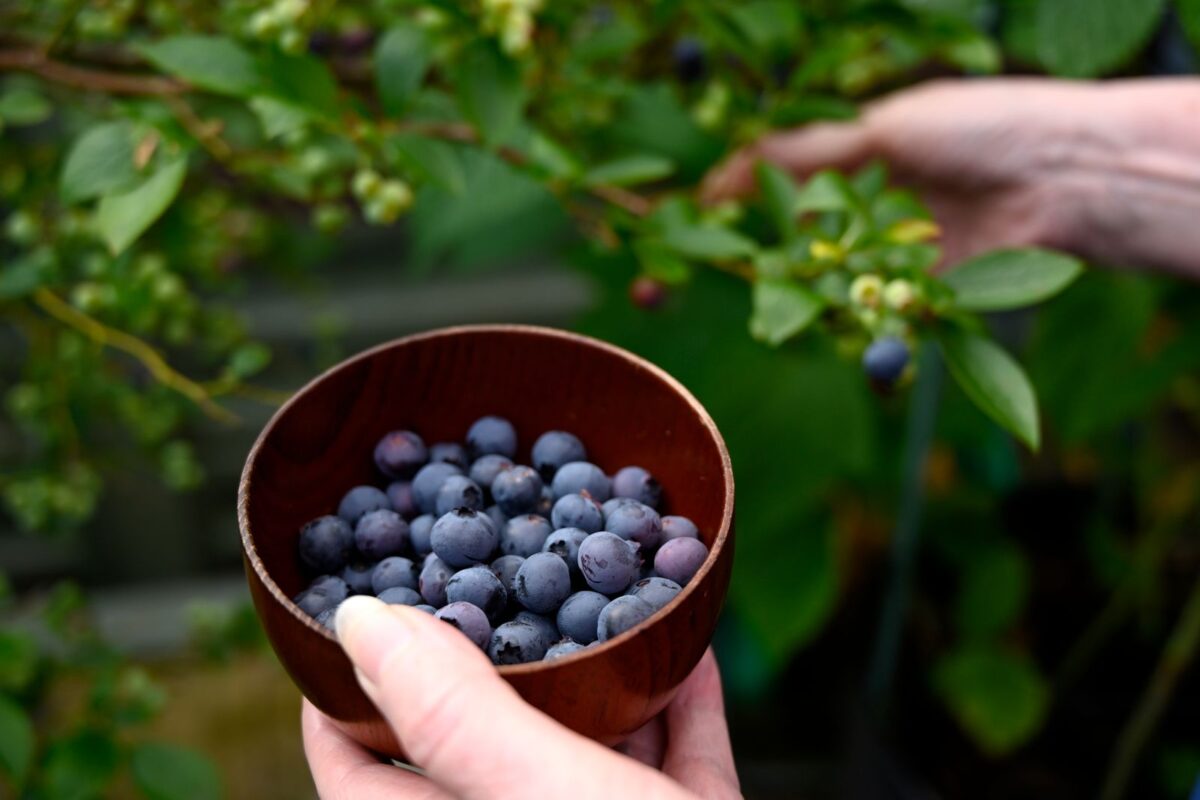
Bilberry (Vaccinium myrtillus) is rich in anthocyanins and often sold for night vision.
What about vitamins A, E, riboflavin and zinc?
Vitamin A matters for the retina and tear film, and deficiency causes dryness and poor night vision. In a well-fed person more is not better, and too much is harmful. Vitamin E is an antioxidant, riboflavin plays a role in normal vision, and zinc supports retinal enzymes and is part of the AREDS combination.
These are standard inclusions. Check the label for amounts, and do not stack two products that both contain vitamin A or zinc. Try my upper limit checker to add a nutrient across your products and compare it with the limit, and my vitamin unit converter to switch between IU and mcg for vitamin A. If you also take a daily multivitamin, my guide to choosing the right multivitamin helps you see what it already contains.
Are lutein and zeaxanthin for kids, and how do you choose the best supplement?
For children, I would ask a pediatrician, because eye supplements are studied in adults. Foods like greens and eggs are the simple route for them.
For adults, my quality control courses taught me to start with the number. Look for milligrams of lutein and zeaxanthin on the label, no proprietary blend hiding them, and a Latin name for each plant. Price per 10 mg of lutein is a fairer comparison than price per bottle. My dose vs product dose guide and tools page help with that. My cost per dose calculator does the per-dose math, and my printable How to Read a Supplement Label, a product from my guides, walks through a label step by step.
When you are ready to look at brands, there is a page where I list popular supplement brands side by side, so you can check each label against the numbers above.
See Popular Supplement Brands!
Common Questions
Do lutein and zeaxanthin work?
They have the best evidence for people at risk of macular degeneration, mostly as part of the AREDS2 formula. I am not aware of proof that they improve vision in healthy eyes.
Can lutein repair eyes?
I know of no study showing repair of damaged eye tissue. Evidence is about slowing progression in some people.
Is it safe to take lutein and zeaxanthin daily?
The AREDS2 trial used 10 mg and 2 mg a day. Ask a pharmacist if you take medicine.
What are the side effects of lutein and zeaxanthin?
I know of no common ones at usual doses. Very high intake can slightly yellow the skin.
Is 40 mg of lutein too much?
I know of no study supporting 40 mg for eye health, and it is four times the AREDS2 amount. Talk to your doctor before using it.
When is the best time to take lutein and zeaxanthin?
With a meal that contains fat, because both pigments are fat-soluble.
Which foods contain lutein and zeaxanthin?
Leafy greens like kale and spinach, and egg yolks.
Final Thoughts
Lutein and zeaxanthin are the best-studied eye nutrients, with evidence strongest for slowing late macular degeneration in at-risk people. Neither is shown to repair eyes or sharpen healthy vision, and extras like bilberry, ginkgo and maqui have thinner evidence.
Eat leafy greens and eggs, compare label milligrams with the 10 mg and 2 mg studied, and ask your doctor or pharmacist before adding a high-dose formula.
