


















This article was written and reviewed by Serge, MSc. Leveraging expertise in Biochemistry, Biogeochemistry and Chemical Quality Control, I share insights based on published research to help readers better understand the potential benefits and limitations of supplement ingredients.
Affiliate disclosure: This site has affiliate links, including Amazon. As an Amazon Associate I earn from qualifying purchases, at no extra cost to you.
Dear friend,
I want to talk about something that doesn’t get attention until it starts bothering us, joints.
Not in a dramatic way. Just that quiet stiffness. The knee that feels a bit slower. The shoulder that clicks. The way your body takes a little longer to “get going” in the morning.
I’ve been reading about different joint support supplements lately, and one that also kept appearing was Flexomore. Instead of reacting to the marketing, I decided to slow down and look at the ingredient list. Because at the end of the day, that’s what matters.
So let’s talk about it.
Just what’s inside and what science actually says.
First, What Is Flexomore Supposed to Be?
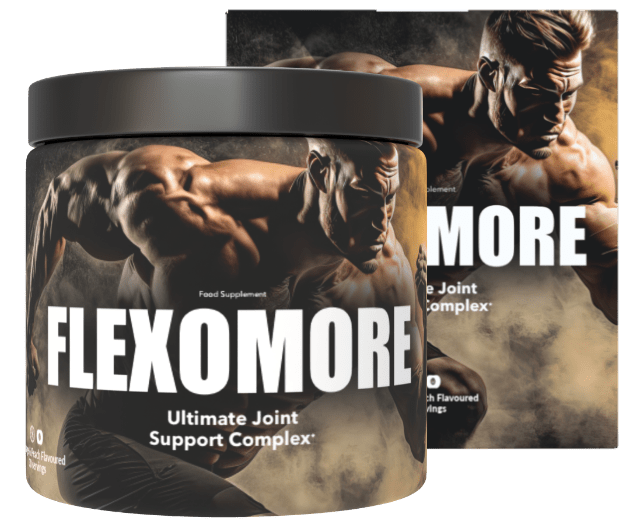
Flexomore is marketed as a joint and bone support supplement. It comes as a powder, orange and peach flavored, and combines collagen, plant extracts, minerals, and vitamins.
The idea behind it seems straightforward:
Support connective tissue.
Support cartilage.
Support bones.
Support mobility over time.
Nothing special. It just helps support your joints and manage inflammation.
That’s a good starting point.
Collagen – The Structural Backbone
The main ingredient in Tendoforte is hydrolyzed collagen. Collagen is the protein that gives structure to cartilage, tendons, and ligaments. Think of joints like hinges, collagen helps keep those hinges stable and resilient.
Hydrolyzed collagen is broken down into smaller peptides, making it easier for the body to absorb.
A systematic review published in Orthopedic Reviews looked at 36 randomized controlled trials on type I hydrolyzed collagen (Brueckheimer et al., 2025). The researchers analyzed its effects on bones, joints, and muscles in different groups of people, including healthy adults, older adults, and those with joint issues like osteoarthritis.
They found that collagen supplementation, especially when taken consistently over weeks or months, can support joint mobility, reduce pain, and improve tendon and connective tissue function. The effects are gradual, not immediate but they make sense for long-term structural support of joints.
As a scientist, I find this interesting because it shows how a simple, naturally occurring protein can have measurable effects on connective tissues when studied carefully over time.
Glucosamine – The Cartilage Supporter
Glucosamine sulfate 2KCl is a key ingredient in Flexomore. Glucosamine naturally occurs in cartilage, where it helps produce molecules that maintain cartilage hydration and resilience.
The “2KCl” form, or potassium chloride-stabilized glucosamine sulfate, is included because it improves the stability and absorption of glucosamine, potentially enhancing its effects for long-term joint support.
Williams & Ampat (2023) reviewed clinical studies on glucosamine sulfate and concluded that, while in vitro research shows it can stimulate cartilage-building processes and reduce cartilage breakdown, human trials have shown mixed results, with some reporting moderate joint comfort benefits and others showing minimal impact.
This support develops gradually rather than providing instant relief. As a scientist, I find glucosamine fascinating because it links a naturally occurring molecule to structural support in joint tissues.
Curcuma longa (Turmeric)
Turmeric contains curcuminoids, which are known to influence inflammatory pathways like NF-κB. Some clinical trials suggest turmeric extracts may support joint comfort in people with mild inflammatory conditions.
It’s not a pharmaceutical anti-inflammatory. But its mechanism is biologically interesting.

Boswellia serrata
Boswellia resin contains boswellic acids that inhibit 5-lipoxygenase, an enzyme involved in inflammation processes. There’s decent evidence suggesting Boswellia may help support mobility and reduce joint stiffness over time.
When turmeric and Boswellia are combined, the goal is simple: support the body’s natural inflammatory balance.

Ginger
Ginger (Zingiber officinale) contains active compounds called gingerols, which have mild anti-inflammatory and antioxidant effects.
These properties may help reduce joint discomfort, stiffness, and exercise-related soreness, supporting overall joint mobility. While the effects are gradual rather than dramatic, ginger complements the Flexomore formula.
I’ve discussed ginger’s joint-support benefits in several of my previous posts, highlighting its consistent role in promoting healthy joints.
MSM – Sulfur for Connective Tissue
Methylsulfonylmethane (MSM) provides bioavailable sulfur, which is essential for collagen formation and maintaining connective tissue structure.
Several studies indicate that MSM may support joint health by improving flexibility and reducing discomfort associated with exercise.
As with other joint-supportive nutrients, these effects are gradual and cumulative, providing slow, supportive benefits rather than instant relief (Butawan, Benjamin & Bloomer, 2017).
Minerals and Vitamin C – The Quiet Support System
Flexomore also includes Aquamin, a calcium-rich marine algae, Aquamin Mg as a source of magnesium, vitamin C, and BioPerine, a black pepper extract that enhances absorption.
Calcium supports bone density, while magnesium aids muscle function and protein synthesis. Vitamin C is essential for collagen formation, and BioPerine helps improve curcumin absorption. These ingredients aren’t flashy, but they provide practical, foundational support for joints and overall musculoskeletal health.
Does the Formula Make Sense?
From a structural standpoint, yes.
You have:
Structural support (collagen, glucosamine, MSM)
Inflammatory pathway support (turmeric, Boswellia, ginger)
Bone mineral support (calcium, magnesium)
Collagen synthesis support (vitamin C)
Absorption support (BioPerine)
That’s a logical framework for a joint support supplement.
Does that guarantee results? No supplement can promise that responsibly.
But biologically, the combination isn’t random.
Summary
Putting the marketing aside, Flexomore is a multi-ingredient formula focused on structural support and maintaining inflammatory balance.
It’s a blend of collagen, plant extracts, minerals, and supportive nutrients with research backing.
Whether it’s worth trying depends on your goals, consistency, and expectations.
For anyone focused on joint mobility and connective tissue support, reviewing the ingredient science is always the best place to start.
Frequently Asked Questions
What is Flexomore?
Flexomore is a powdered dietary supplement formulated to support joint and bone health. It combines collagen peptides, plant extracts, minerals, and vitamin C in one formula.
How does Flexomore work?
It supports connective tissue structure through collagen and glucosamine, contributes to collagen production with vitamin C, and includes plant extracts like turmeric and Boswellia that influence inflammatory pathways. Minerals such as calcium and magnesium support bone and muscle function.
How long does it take to see results?
Joint support supplements are typically gradual. Research on similar ingredients often measures results after several weeks or months of consistent use rather than days.
Can non-athletes use Flexomore?
Yes. Joint and bone support is not limited to athletes. Anyone interested in maintaining mobility and connective tissue health may consider it.
Is it safe for long-term use?
The ingredients in Flexomore are commonly used in long-term supplementation when taken as directed. Individual health conditions and medications should always be considered before use.

